











































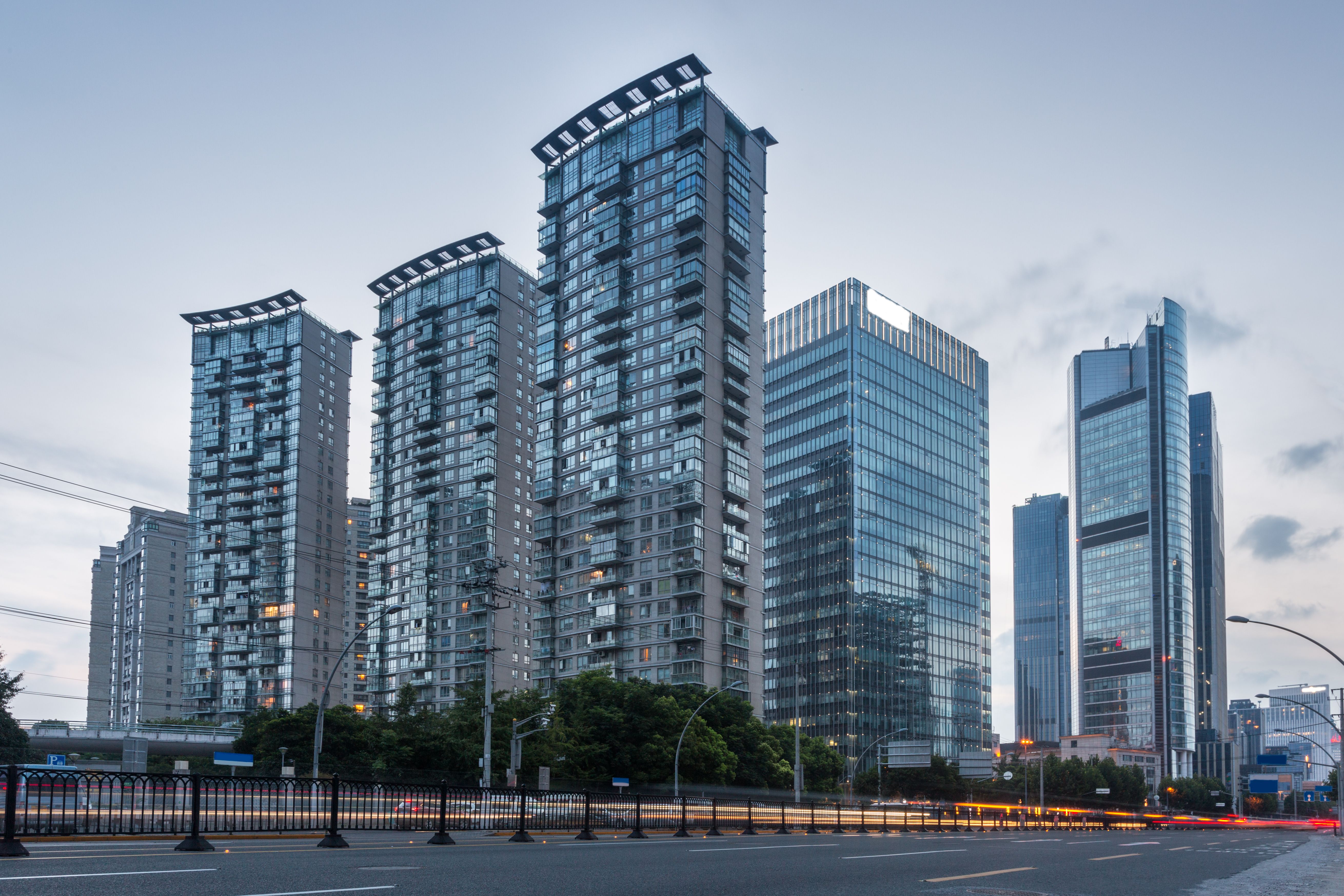











































India crossed 1 billion square feet of Grade A office stock in 2025 a milestone that most markets take 40 to 50 years to reach. India's commercial real estate sector achieved it in under 25. This is not just a headline statistic; it is evidence of the depth and maturity of institutional commercial property development in the country, and it reshapes what investors should expect from Grade A office as an investable asset class.
Yet the phrase 'Grade A' is used inconsistently in property marketing. Developers use it liberally, brokers apply it generously, and investors sometimes assume it simply means 'new.' For Grade A office space India investment to mean what institutional investors need it to mean a reliably premium, institutional quality asset that commands top rents, attracts best in class tenants, and maintains lowest decile vacancy it requires a more precise definition.
This article provides exactly that: a clear specification of what Grade A office truly means in the Indian context, why it matters so significantly for investment returns, and how SM REITs give HNI investors structured access to this category of asset.
What Separates Grade A from Grade B Office Space in India
The distinction between Grade A and Grade B office space in India is not primarily about age or aesthetics though both play a role. It is fundamentally about the quality of infrastructure, the sophistication of building management, and the consequent ability of the building to attract and retain institutional quality tenants.
The Grade A Specification
- Floor plate size: minimum 15,000–20,000 sq ft per floor, enabling large occupiers to consolidate on contiguous floors rather than splitting operations
- Floor to ceiling height: minimum 2.75 metres in office areas, with structural capacity for raised flooring and false ceilings
- Power infrastructure: 100% power backup through DG sets or UPS systems, with minimum 10 kVA per 1,000 sq ft capacity for data intensive tenants
- Cooling efficiency: high-performance centrally managed HVAC with BMS (Building Management System) for energy optimisation and tenant comfort
- Sustainability certification: LEED Gold or Platinum, IGBC Green Building, or equivalent — increasingly a prerequisite for GCC and multinational tenants
- Structural loading: minimum 5 kN per sq metre live load to accommodate server rooms, trading floors, and dense office configurations
- Parking ratio: minimum 1 car park per 1,000 sq ft of office area in most tier1 city markets
- Common area quality: lobby design, elevator capacity, food court and amenities at institutional standard
Grade B buildings fall short on one or more of these criteria — most commonly on power infrastructure (unreliable or inadequate backup), sustainability certification (absent or downgraded), floor plate size (smaller, less suitable for large tenants), or building management (no BMS, reactive rather than preventive maintenance).
Infrastructure, ESG, and Amenity Standards of Grade A Buildings
The ESG dimension of Grade A office quality has moved from differentiating factor to baseline requirement over the past three years. GCCs and multinational occupiers operating under their parent company's sustainability mandates are increasingly unable to sign leases in buildings without LEED or equivalent certifications regardless of how competitive the rent might be.
This has created a clear bifurcation in leasing demand. Buildings with LEED Platinum or Gold certification have experienced vacancy compression and rent appreciation in 2024 25.i Buildings without credible sustainability certification are finding that an increasing proportion of their natural tenant base GCCs, IT services companies, professional services firms are constrained by ESG mandates from considering them.
For investors, this sustainability dynamic is a decisive argument for Grade A certification as a non-negotiable property selection criterion. An institutional quality commercial property India investment that lacks ESG credentials faces a progressively narrowing tenant market, which translates into higher vacancy risk and weaker rental growth both of which compress the income stream and the capital value of the asset.
Amenity Quality as a Tenant Retention Tool
Grade A buildings compete for talent as much as they compete for tenants. GCCs and large IT organisations evaluate offices partly on whether employees want to work in them. High-quality food courts, wellness centres, landscaped outdoor areas, convenient parking, and efficient elevators are not luxuries — they are tenant retention tools that influence renewal decisions.
Rent Premium Data: Grade A vs Grade B Across Key Indian Cities
City | Grade A Avg. Office Rental (Avg.) /sf/Mo (2025) | Office Market Vacancy (Avg.) /sf/Mo (2025) |
| BENGALURU | ₹ 102 | 12% |
| CHENNAI | ₹ 79 | 8.8% |
| HYDERABAD | ₹ 70 | 26.3% |
| MUMBAI | ₹ 148 | 14.7% |
| DELHI NCR | ₹ 90 | 21.7% |
| PUNE | ₹ 87 | 11.9 % |
Grade A office buildings attract a different kind of tenant. They are preferred by Global Capability Centres (GCCs), multinational companies, large IT firms, BFSI companies and co-working operators because these businesses need reliable infrastructure, better amenities, efficient building management and well-connected locations.
According to ANAROCK’s India Office Market Annual Update CY2025, India’s top seven office markets recorded 58.2 million sq. ft. of net office absorption in 2025, a 17% year-on-year increase. The report also notes that this data represents Grade A office developments.
This demand is also reflected in rentals. Average office rentals across India’s top seven markets increased to INR 92/sq. ft./month in 2025, up 6% year-on-year. Vacancy also improved slightly, moving from 16.5% in 2024 to 16.1% in 2025.
In simple terms, Grade A offices are not just better-looking buildings. They are preferred by stronger tenants, supported by larger leasing activity, rising rentals and steady demand from companies expanding in India
Why Grade A Assets Attract GCCs, MNCs, and Long Lease Tenants
The link between Grade A building quality and institutional tenant quality is not coincidental it is causal. Global Capability Centres GCCs and Multinational Companies MNCs have specific requirements that only Grade A buildings can consistently meet adequate power for dense technology setups, ESG certification required by parent company mandates, large contiguous floor plates for consolidated operations, and high-quality common areas for talent attraction.
This self-reinforcing dynamic Grade-A buildings attract institutional tenants, institutional tenants sign long leases at premium rents, premium long leases make the building more valuable — is the core of the Grade A investment thesis. It explains why Grade A assets in tier1 micro markets have appreciated at 5–8% per annum over 10year periods while Grade B assets have stagnated or depreciated in real terms.
The ‘profile of Grade A buildings reflects this quality differential. A building with GCC anchor tenants on 7year leases has a WALE of 5–6 years, meaning the income is contracted well into the future. A Grade B building with SME tenants on 1–2year leases has a WALE of 1 year or less, meaning the income base is constantly being underwritten with no visibility beyond the near term.
How SM REITs Provide Retail Access to Grade A Commercial Properties
The Grade A office investment thesis is well established among institutional investors — large domestic and international REITs, pension funds, and private equity firms have built multibillion dollar portfolios on exactly this logic. The qu estion for HNI investors has always been: how do I access this category of asset at a meaningful scale without ₹50–500 crore of direct investment capital?
The SM REIT framework answers this question directly. hBits, as a SEBI registered SM REIT manager, sources, evaluates, and structures investment opportunities in Grade A commercial properties across India's tier1 markets. Each scheme represents a specific, identified asset with full disclosure of building quality specifications, tenant details, lease terms, WALE, and projected distributions.
The minimum investment of ₹10 lakh per scheme gives HNI investors access to the same grade of assets that institutional buyers are competing for in the direct market with the added benefit of SEBI regulatory oversight, quarterly distributions, and Demat held unit liquidity that direct property investment cannot provide.
Grade A is not a marketing label. In the context of SM REIT investing, it is a precisely defined asset quality benchmark that directly determines tenant quality, income visibility, capital appreciation trajectory, and exit liquidity. Investors who understand this distinction are better positioned to evaluate every SM REIT scheme they consider and to hold that evaluation to the standard that institutional quality commercial real estate investment demands.