























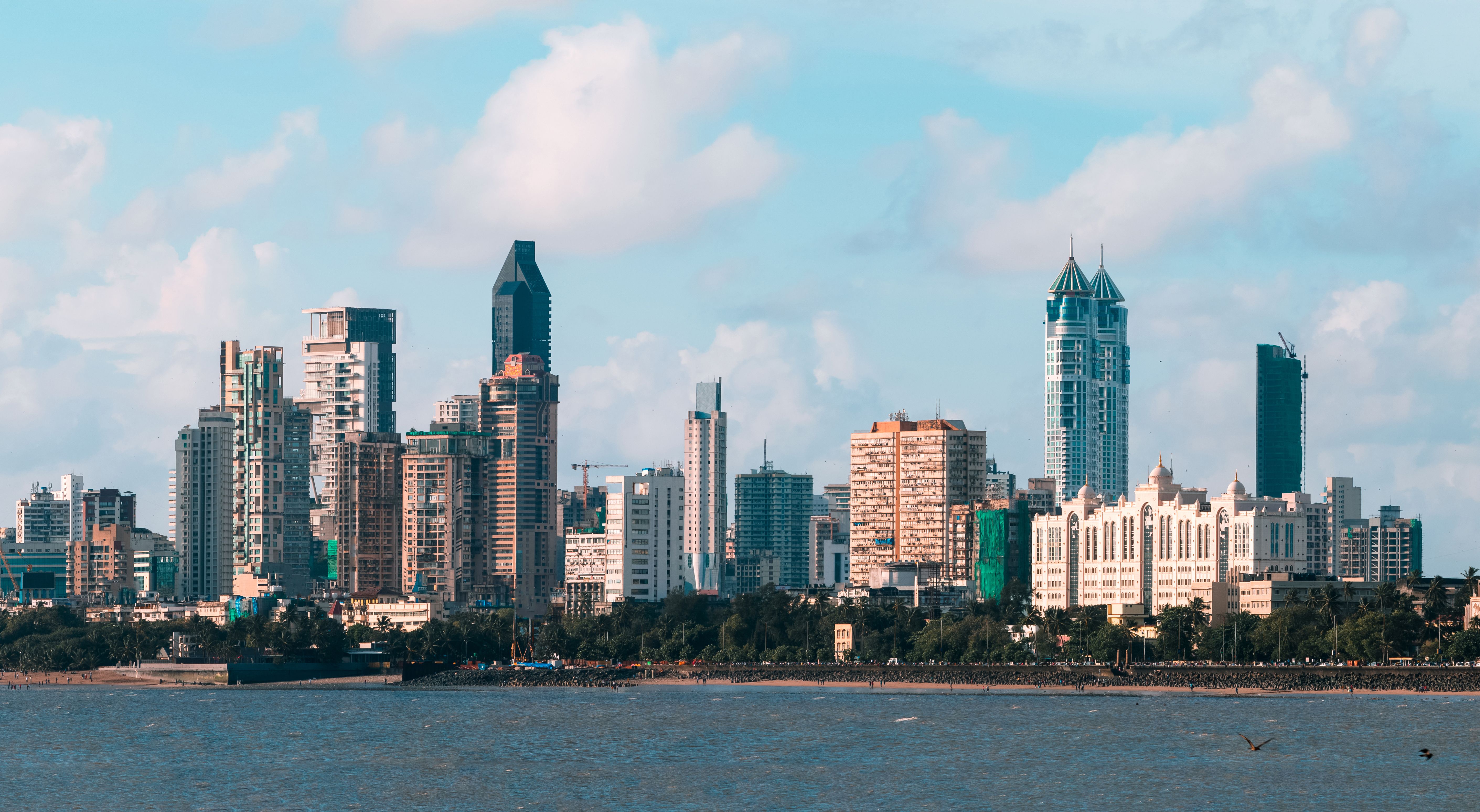













































The micro-market data reveals the tiering of Mumbai's office market. BKC commands transacted rents of ₹237–446 per square foot per month, among the highest of any commercial market in India, with prime assets in BKC and Worli achieving rents that often exceed ₹350–600 a reflection of its status as the preferred address for India's financial sector. Demand here is anchored by BFSI occupiers, investment firms and advisory practices. BKC office space investment Mumbai yields are structurally lower in gross terms, given the very high capital values BKC commands, but benefit from a strong rent escalation trajectory of 7% over the past twelve months and limited available supply, with the district accounting for just 4% of H2 2025 leasing — a function of scarce space rather than weak demand.
Central Mumbai, which includes Lower Parel alongside Parel, Dadar and Prabhadevi, offers an attractive middle market: a premium central location with strong tenant quality spanning BFSI, consulting and India-facing firms, at transacted rents of ₹195–279 per square foot per month. Rents here rose 5% over the past year, and at a level below BKC, this district implies a better yield on capital for investors entering through SM REIT structures.
BKC, Lower Parel, Andheri-Kurla: Micro-Market Data and Vacancy Trends
Business District
| Key Locations | Avg Rent (₹/sq ft/mo) | Rent Growth (12-mth) | Share of H2 2025 Leasing | Dominant Occupiers |
BKC & Off-BKC
| BKC, Bandra (E), Kalina, Kalanagar | ₹237–446 | 7% | 4% | BFSI, investment firms, advisory |
| CBD & Off-CBD | Nariman Point, Cuffe Parade, Fort, Mahalaxmi, Worli | ₹200–279 | 6% | 9% | BFSI, investment firms, advisory |
| Central Mumbai | Parel, Lower Parel, Dadar, Prabhadevi | ₹195–279 | 5% | 7% | BFSI, consulting, India-facing firms |
| SBD Central | Kurla, Ghatkopar, Vikhroli, Kanjurmarg, Powai, Bhandup, Chembur | ₹130–232 | 7% | 20% | GCCs, IT/ITeS, BFSI |
| SBD West | Andheri, Jogeshwari, Goregaon, Malad | ₹102–195 | 6% | 37% | IT/ITeS, BFSI, GCCs |
| PBD | Thane, Airoli, Vashi, Ghansoli, Rabale, Belapur | ₹56–100 | 5% | 24% | IT/ITeS, BFSI back-office |
The micro-market data reveals the tiering of Mumbai's office market. BKC commands transacted rents of ₹237–446 per square foot per month, among the highest of any commercial market in India, with prime assets in BKC and Worli achieving rents that often exceed ₹350–600, a reflection of its status as the preferred address for India's financial sector. Demand here is anchored by BFSI occupiers, investment firms and advisory practices. BKC office space investment Mumbai yields are structurally lower in gross terms, given the very high capital values BKC commands, but benefit from a strong rent escalation trajectory of 7% over the past twelve months and limited available supply, with the district accounting for just 4% of H2 2025 leasing — a function of scarce space rather than weak demand.
Central Mumbai, which includes Lower Parel alongside Parel, Dadar and Prabhadevi, offers an attractive middle market: a premium central location with strong tenant quality spanning BFSI, consulting and India-facing firms, at transacted rents of ₹195–279 per square foot per month. Rents here rose 5% over the past year, and at a level below BKC, this district implies a better yield on capital for investors entering through SM REIT structures.
Who Is Leasing in Mumbai? BFSI, Flex Operators, and Engineering Firms
The composition of Mumbai's leasing demand has shifted in interesting ways over the past three years. BFSI banking, financial services, and insurance remain the anchor occupier category in BKC and Lower Parel, accounting for 35–40% of Grade A leasing by area. Global investment banks, domestic private banks, asset management companies, and insurance corporations continue to expand their Mumbai footprints.
The growth category in Mumbai's office market is the BFSI GCC dedicated capability centres established by global financial institutions for technology, data, analytics, and compliance operations. JPMorgan, HSBC, Standard Chartered, and a range of other global banks have established or expanded BFSI GCCs in Mumbai's premium corridors, absorbing Grade A floor space at institutional lease terms.
Flex operators are the third significant demand category. Premium managed office operators IndiQube, WeWork, Awfis have secured master leases in BKC and Lower Parel buildings, sub-letting to financial sector SMEs, fintech companies, and consulting boutiques that want BKC addresses without 5-year direct lease commitments. This demand adds building vibrancy and amenity density without displacing core institutional tenancy.
Engineering, consulting, and professional services firms McKinsey, Bain, BCG, EY, and Deloitte have consolidated and sometimes expanded their Mumbai offices, preferring BKC and Lower Parel for talent proximity to IITs, IIMs, and the broader financial services talent pool. This professional services demand is a stable, long-duration component of the Mumbai Grade A office yield 2026 fundamentals.
Rental Yield Outlook and Grade A Supply Pipeline for 2026
Mumbai's rental yield outlook for 2026 is positive across all Grade A micro-markets, with BKC and Lower Parel showing the most dynamic rent trajectory. The combination of supply constraint, strong leasing demand, and tightening vacancy, all three of which are simultaneously present in BKC, creates conditions for above-average rent appreciation in the 2026–2028 cycle.
Grade A supply additions in Mumbai's core markets are limited by geography and permitting timelines. The BKC Development Authority's available FSI is largely committed, and new large-scale developments in the corridor face 3-to-5-year lead times even with existing land. Lower Parel has limited available development land, though conversion projects (former mill lands) continue to add a selective Grade A supply. Andheri-Kurla has a more active supply pipeline, which explains the higher vacancy rate in that sub-market relative to core CBD locations.
For investors, the supply-demand equation in BKC and Lower Parel translates into strong lease renewal probability, rent escalation at above-average rates, and sustained low vacancy, all of which improve income visibility for SM REIT schemes with assets in these micro-markets. The capital appreciation case rests on the same supply constraint: Grade A BKC and Lower Parel assets have historically traded at a cap rate compression relative to other Indian markets, reflecting the structural scarcity premium.
How to Invest in Mumbai Commercial Real Estate via SM REITs
Direct commercial property acquisition in BKC or Lower Parel typically requires ₹200–500 crore of capital for a meaningful Grade A asset, a scale accessible only to institutional investors, large corporates, or family office-level wealth. For HNI investors seeking exposure to Mumbai's premium commercial market, SM REITs offer the most direct, structured, and transparent route.
hBits evaluates commercial assets across India's major markets, including Mumbai's premium corridors. The Vaswani Centropolis asset in Bengaluru's CBD, for example, represents the type of institutional-quality, income-generating Grade A commercial property that hBits brings to SM REIT investors, a property that would be inaccessible to individual HNIs through direct acquisition but fully accessible through the SM REIT structure at ₹10 lakh per scheme.
For investors specifically interested in Mumbai exposure, the hBits platform provides full transparency on any Mumbai-based scheme's asset details, tenant quality, micro-market context, and yield projections, giving them the same information that institutional buyers use to make direct property investment decisions, in a regulated, distribution-paying format.
Mumbai's commercial real estate market in 2026 is characterised by tight vacancy, rising rents, constrained supply, and strong institutional demand the combination that has historically generated the strongest risk-adjusted returns in any commercial property market. For investors who understand what drives these returns, SM REITs offer the most accessible and regulated path to participation.